NEW LOCATIONS OPEN NOW
Signs Your Dog Needs More Socialization (And How Daycare Helps)

The neighbor's golden retriever trots past, and your dog goes from calm to full chaos in half a second, leaving you to apologize to a stranger holding a leash. Sometimes moments like that point to a gap in dog socialization, the practice that teaches dogs that new people, other dogs, strange sounds, and unfamiliar places are safe. Other times, fear, frustration, pain, or genetics are behind it.
Dogs can build social skills at any age, though every dog’s path looks different. Below are the signs worth watching for and how daycare can help the right dog feel at home in the pack.
Signs Worth Watching Around Other Dogs
Some of these show up on every walk. Others only appear at the dog park or when a friend brings their pup over. Each one can have more than one cause, so look for patterns that repeat and check with your vet or a qualified trainer before deciding what’s behind them.
Lunges or barks at dogs on leash: Some of this is leash frustration, especially in friendly dogs who want to say hello and can't. Others are fearful and want the other dog to back off. A trainer can help you figure out which one you’re seeing.
Freezes, tucks their tail, or hides behind your legs: A dog who goes stiff and still when another dog approaches is uncomfortable. That can come from limited experience, a scary past encounter, or a naturally cautious temperament, and more group time won’t help every dog.
Plays way too rough: Body slams, pinning, nonstop mounting, and ignoring a growl or an air snap can mean a dog hasn’t learned how canine conversations work yet.
Snaps when sniffed: A quick sniff is basic dog manners. Dogs who can't tolerate it usually feel cornered. Some are sore or in pain, so a vet check is a smart first step.
Stares hard with a stiff body: This one deserves real attention. A fixed stare, a closed mouth, and weight shifted forward can come right before a scuffle. Dogs who do this regularly need an individual plan from a qualified trainer before any group play.
Avoids every dog, every time: Plenty of adult dogs are content to ignore the pack. The concern is a dog who actively tries to escape whenever another dog gets close.
Signs Worth Watching Around People, Places, and Sounds
Watch what happens when someone new walks through your front door. A well-socialized dog might bark once, then wander over for a sniff. A nervous dog may disappear under the bed for an hour or bark nonstop until the guest leaves.
Outdoors, the clues get more specific: Some dogs fall apart at the sight of a hat, a hoodie, an umbrella, or a person with a cane. Others plant their feet and refuse to walk past a certain corner, a construction site, or a noisy bus stop. City and suburban dogs deal with a lot of this every day, so a dog who trembles through half their walk is working harder than they should be. Fear like this usually responds best to a slow, individual plan built with a trainer.
Vet and grooming visits are another tell: A dog who shakes, drools, or tries to climb into your lap on the exam table may not feel comfortable with strangers handling them. Paws, ears, and bellies are common sore spots. Handling sensitivity can also come from pain or a past bad experience, so start with your vet.
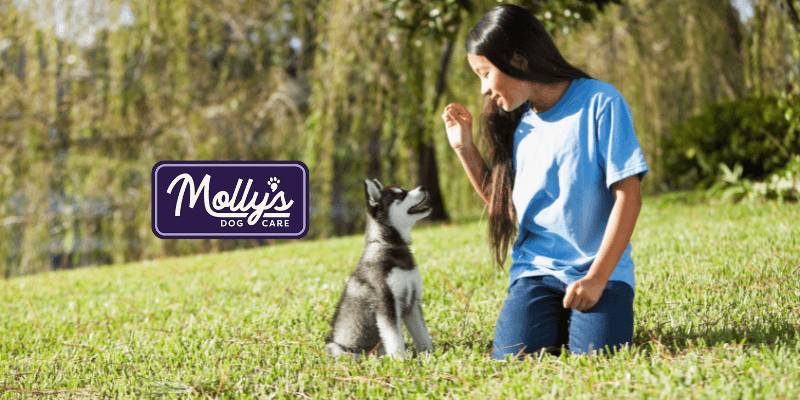
Puppy socialization signs look a little different: A young pup who startles and can't recover within a few seconds, won't take treats in new places, or hides from every new person is telling you they need gentle exposure at their own pace. Your vet or a puppy trainer can help you set that pace.
How Daycare Helps Dog Socialization
Group daycare can be a great fit for dogs who are social, curious, and comfortable around other dogs, and it isn’t right for every dog. Every dog needs to pass Molly’s Preliminary Social Evaluation and meet our vaccination requirements before joining group play.
Illustrative example: Pepper, a shy but curious beagle mix, passes her Preliminary Social Evaluation, then eases into play with a couple of mellow new friends. Staff watches how she handles each visit, and because she stays comfortable, she’s trotting in the door with her tail up by week three. Every dog moves at their own pace, and some won’t follow Pepper’s path at all.
Other dogs teach best: A calm, well-mannered adult dog can tell a pushy pup to back off with one look, and social dogs pick up canine body language fastest from each other.
Repetition builds confidence: Regular daycare days give a comfortable dog the same safe routine over and over, along with new people, sounds, and dogs coming and going. That steady, positive exposure helps confidence grow.
Trained staff catch small signals: Good daycare teams spot a stiff stance before it turns into trouble and step in before play gets out of hand. Molly's also sends a daily report card, so you can follow your pup's social life from your desk. Plus, a dog who's played all day usually comes home calmer.
Dog Socialization Tips for Home and the Neighborhood
Daycare does a lot, and the time you spend together between visits adds up, too. Keep sessions short, keep treats handy, and stop while your dog is still having fun. These five habits are an easy place to start. Go at your dog’s pace, and move to the next step only while your dog stays relaxed. If your dog’s fear or reactivity is strong, ask a qualified trainer to tailor these steps.

Give Your Pup a Bigger Social Circle
If you think your dog would enjoy group play, come see us. Every Molly’s location offers a free first visit, where you can tour the space, meet the staff, and learn about our Preliminary Social Evaluation and vaccination requirements. Your local team can walk you through what that location needs. Find your nearest Molly's and book yours.
Dog Socialization FAQs
What are the signs a dog isn't socialized?
Common signs include lunging or barking at other dogs, hiding from visitors, playing too rough, and trembling at the vet or groomer. These behaviors don’t always mean a dog needs more socialization, though. Fear, frustration, pain, and genetics can look similar, so a vet or qualified trainer is the best person to help you figure out what’s going on.
Can you socialize an older dog?
Yes. Adult and senior dogs can get more comfortable around new dogs and people, though progress usually comes more slowly than it does with puppies. Short, positive sessions and a lot of patience make the biggest difference.
When should puppy socialization start?
Early. The American Veterinary Society of Animal Behavior points to the first three months of life as the most important window and says puppy classes can start as early as 7 to 8 weeks.
How long does it take to socialize a dog?
There's no set timeline. A mildly shy dog might relax after a few weeks of regular practice, while a very fearful dog may need months and an individual plan from a trainer. Steady, small wins matter more than speed.
Recent Blogs:

Dog Enrichment: What Is It, Benefits, And Ideas
Signs Your Dog Needs More Socialization (And How Daycare Helps)

How Often Should You Get Your Dog Professionally Groomed?

Common Behavior Problems Daycare and Training Can Fix Together

Summer Grooming Tips to Keep Your Dog Cool
From Puppy Class to Canine Good Citizen: A Dog Training Roadmap

How to Choose the Best Dog Daycare

What Colors Can Dogs See?

My Dog Has Separation Anxiety—Will Daycare Help?

How Often Should You Take Your Dog to Daycare?