NEW LOCATIONS OPEN NOW
My Dog Has Separation Anxiety—Will Daycare Help?
Some dogs handle alone time just fine. Others hear the jingle of keys and completely fall apart. If yours is the second type, you've probably tried everything from puzzle toys, background TV, a worn t-shirt that smells like you, and wondered whether dog daycare might actually make a dent.
For a lot of dogs, daycare makes a real difference. But it's worth understanding why before you book that first visit, because it isn't a fix for every form of anxiety, and the dogs who benefit most are usually the ones whose owners go in with realistic expectations.
What Separation Anxiety Actually Is
Separation anxiety isn't a dog being dramatic or "bad." It's a genuine stress response triggered by being alone or separated from the people they're attached to. Some dogs are more prone to it by nature, some develop it after a change in routine, and others spiral into it gradually over time without an obvious trigger.
Common signs include destructive behavior when left alone, excessive vocalization, accidents despite being house-trained, and dogs that seem visibly distressed at departure cues, like leashes going on, bags being picked up, and keys jingling.
The tricky part is that the core problem is being alone. Which means the solution can't just be a distraction.
Where Daycare Actually Helps
Dog daycare for separation anxiety works best when the root issue is isolation rather than attachment to a specific person. A lot of anxious dogs aren't just missing their owner; they're overwhelmed by silence, inactivity, and the absence of any social interaction. For those dogs, a structured environment with consistent staff, other dogs, and built-in stimulation throughout the day can genuinely reduce anxiety levels over time.
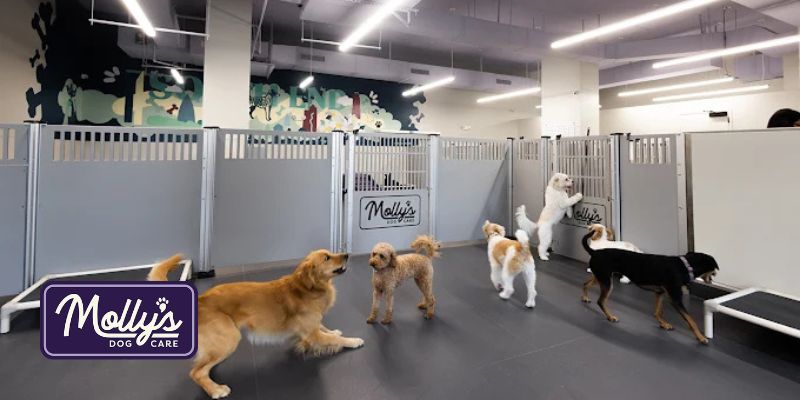
Dogs aren't just dropped into a room and left to figure it out at Molly’s Dog Care. Groups are organized by size, age, and temperament. Staff are present and attentive all day. There's structured play, midday rest on Kuranda beds, and a daily rhythm that anxious dogs can start to count on. Predictability matters a lot for anxious dogs, and a consistent daycare schedule gives them exactly that.
Frequent, regular attendance tends to produce better results than occasional visits. A dog who comes in twice a week builds familiarity with the space, the staff, and the other dogs. That familiarity is its own form of reassurance.
When Daycare Isn't Enough on Its Own
For dogs with more severe separation anxiety, the kind tied specifically to one person or triggered the moment any human leaves the room, daycare addresses the symptom (being alone) without treating the underlying anxiety. These dogs may still struggle at drop-off, may have a hard time settling even in a social environment, and can cycle back into full distress at home the moment the routine changes.
That doesn't mean daycare isn't worth trying. It often helps even in more complex cases. But it works best alongside other interventions: behavioral training, a consistent home routine, and in some cases, guidance from a veterinary behaviorist. Molly's also offers training services, which can be a natural pairing for dogs working through anxiety, especially for building the confidence and independence that anxious dogs often lack.
Signs Daycare Is Helping Your Anxious Dog
It's not always obvious at first. Some dogs take a few weeks to fully settle into a new environment, and an initial rough drop-off doesn't mean it isn't working. Here's what improvement tends to look like over time:
Drop-offs get noticeably easier with less panting, less clinging, quicker to engage with the environment
Your dog comes home tired in a good way, not wound up or shut down
Destructive or anxious behavior at home starts to decrease on daycare days
Staff report that your dog is relaxed and participates in group play
Molly's daily report cards are genuinely useful here. They give you a real read on how your dog is doing throughout the day, not just a vague "they were fine."
Not Every Dog Is a Daycare Dog, And That's Okay
Molly's requires a Preliminary Social Evaluation before any dog joins group play. This isn't just a formality. It's how the team makes sure the environment is actually going to be a positive experience because a dog who's overwhelmed in a group setting isn't going to get any calmer by being pushed through it. Some anxious dogs thrive in daycare. Others do better with different solutions.
If your dog passes the evaluation and joins Molly's community, the team will get to know them individually. Special needs, one-on-one time, specific sensitivities, and all of it get noted and factored in.
Frequently Asked Questions About Dog Separation Anxiety
Can dog daycare help with separation anxiety?
For many dogs, yes. Daycare addresses the isolation that often drives anxiety, replacing empty hours alone with structured activity, social interaction, and a consistent routine. It tends to work best when anxiety is tied to being alone rather than attachment to one specific person.
Will my anxious dog be okay at drop-off?
Drop-off is often the hardest part, especially early on. Most dogs who struggle at the door settle relatively quickly once they're inside and engaged. If your dog is consistently distressed well into the day, that's worth discussing with the team.
Does daycare replace behavioral treatment for separation anxiety?
No. For moderate to severe cases, daycare works better as one piece of a larger plan that includes training and, when needed, professional behavioral support. It's a meaningful tool, not a standalone fix.
How long before I see improvement?
It varies. Some dogs visibly relax within a few visits. Others need a few weeks of consistent attendance before the routine feels safe enough to fully settle into. Patience and consistency matter here more than speed.
What if my dog is too anxious for group daycare?
That's something the evaluation process will help identify. If group play isn't the right fit, Molly's team can talk through other options.
Let's Find Out What Your Dog Thinks
Anxious dogs deserve a place that gets them. Book your pup's first free visit and let the Molly's team do what they do best to figure out exactly what your dog needs and make sure they actually have a good time.
Find your nearest Molly's and book a free visit.
Recent Blogs:

Summer Grooming Tips to Keep Your Dog Cool
From Puppy Class to Canine Good Citizen: A Dog Training Roadmap

How to Choose the Best Dog Daycare

What Colors Can Dogs See?
My Dog Has Separation Anxiety—Will Daycare Help?

How Often Should You Take Your Dog to Daycare?

Is Dog Daycare Good for Dogs?

Dog Boarding vs. Pet Sitting: What's Better for Your Dog

Why Is My Dog Sneezing?
How Much Does Doggy Daycare Cost?